
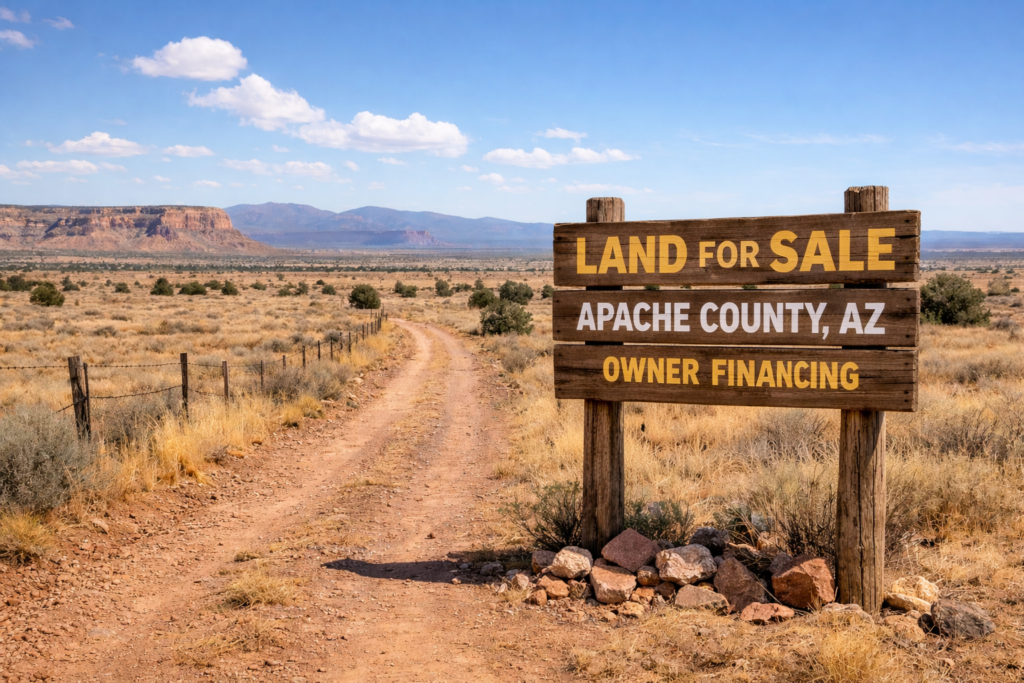
Apache County sits in the northeastern corner of Arizona, covering more than 11,000 square miles of high desert, ponderosa pine forests, and wide-open rangeland. It’s one of the largest counties in the United States by land area and one of the least populated. That combination creates something rare in today’s real estate market: genuinely affordable land with minimal restrictions on how you use it.
If you’ve been searching for unrestricted rural land where you can build off-grid, run livestock, park an RV, or simply own a piece of the American West without an HOA telling you what color to paint your fence, Apache County deserves your attention.
Terra Flow Capital specializes in connecting buyers with affordable rural parcels across Arizona. We maintain an active inventory of land in Apache County, and we work with buyers who want straightforward deals, owner financing options, and honest information about what they’re purchasing.
Apache County draws a specific type of buyer. Not someone looking for a subdivision with city water and garbage pickup. The people who buy here want space, privacy, and the freedom to use their property without jumping through bureaucratic hoops.
Affordability that still exists. While land prices have climbed across much of the Southwest, Apache County remains one of the most affordable markets in Arizona. Parcels regularly sell for under $6,000, with owner financing available that brings monthly payments below what most people spend on streaming subscriptions.
Minimal zoning restrictions. Much of the private land in Apache County falls outside strict zoning ordinances. This means you have flexibility that doesn’t exist in more developed areas. Want to build a cabin? Run a small homestead? Set up a weekend camping retreat? The county generally stays out of your way.
No HOA governance. The parcels we sell don’t come with homeowner association rules, architectural review boards, or monthly dues. Your land is yours to use within county and state guidelines.
Geographic diversity. Apache County isn’t one landscape. Depending on where you buy, you might be in high desert grassland around St. Johns, forested areas near the White Mountains, or the red rock terrain closer to the Navajo Nation boundary. Elevations range from around 5,000 feet to over 9,000 feet, which affects climate, vegetation, and how you might use the property.
The term “unrestricted” gets used loosely in rural land sales, so let’s be specific about what it means in Apache County.
What unrestricted typically means here:
What restrictions still apply:
The practical reality is that Apache County offers significantly more flexibility than buying land in Maricopa County or anywhere near Phoenix. But “unrestricted” doesn’t mean “no rules exist.” Before you buy any parcel, you should understand what you can and cannot do with that specific piece of land.
We provide detailed property information on every parcel we sell, including known restrictions, access details, and utility availability. No surprises after closing.
Apache County covers a massive area, and different regions attract different buyers. Here’s an overview of the primary areas where land sales occur:
Sanders and Chambers Corridor
Along Interstate 40 in the northern part of the county, communities like Sanders and Chambers offer high desert terrain at lower elevations. Land here tends to be the most affordable in the county. The landscape is more sparse, but access via the interstate makes these areas practical for buyers coming from Albuquerque or Flagstaff.
St. Johns and Concho Valley
St. Johns serves as the county seat and provides the most accessible services in the county. The surrounding Concho Valley area offers relatively flat terrain at elevations around 5,700 feet. Buyers here often want land that’s within reasonable driving distance of a town with grocery stores, fuel, and basic services. Summer temperatures stay moderate compared to lower desert areas, and winters bring occasional snow.
Vernon and the White Mountain Foothills
Moving south toward the White Mountains, the terrain gains elevation and pine trees become more common. Vernon and surrounding areas attract buyers interested in mountain-adjacent property without White Mountain resort prices. This area sees more annual precipitation and genuine four-season weather.
Nutrioso and Alpine Adjacent Areas
The far southern portion of Apache County, near the New Mexico border, reaches into genuine mountain terrain. Nutrioso sits at over 8,000 feet elevation. Land here is less common on the market and typically commands higher prices, but buyers get pine forests, cooler summers, and a more secluded mountain environment.
Buyers purchase rural Apache County land for many reasons. Here are the most common uses we see:
Off-grid homesteading. Arizona has favorable regulations for off-grid living compared to many states. Solar installations don’t require permits in most unincorporated areas. Rainwater harvesting is legal. Composting toilets are permitted in many situations. Buyers who want to build self-sufficient properties find Apache County accommodating.
Recreational retreats. Many buyers don’t plan to live on their land full-time. They want a place to escape on weekends, set up a travel trailer, build a small cabin over time, or simply have land to visit during hunting season. Apache County allows this type of intermittent use without requiring you to build a permanent residence.
RV and camping use. Unlike many Arizona counties that restrict how long you can camp on your own property, Apache County generally permits extended RV or camping use on private land. This makes it attractive to buyers who want to test an area before building, or who prefer the RV lifestyle without paying monthly lot fees.
Livestock and small-scale agriculture. The grassland and high desert terrain supports livestock grazing. Many parcels work well for horses, cattle, goats, or small hobby farms. Agricultural use also brings potential property tax advantages in Arizona.
Investment and land banking. Some buyers purchase Apache County land as a long-term hold, expecting continued population growth in Arizona to eventually push values higher. The low purchase prices and minimal carrying costs (property taxes often run under $100 annually) make this strategy accessible.
Future retirement property. Buyers in their 40s and 50s sometimes purchase land now with plans to build or relocate during retirement. Locking in today’s prices while paying off the land over time positions them well for future use.
Traditional banks rarely finance raw land purchases under $50,000. This creates a barrier for buyers who want affordable rural property but can’t write a check for the full amount.
Terra Flow Capital offers owner financing on our Apache County inventory. Here’s how it works:
Low down payments. Most of our parcels require down payments starting at a few hundred dollars, not thousands.
Fixed monthly payments. We structure simple financing with fixed payments, typically ranging from $199 to $300+ per month depending on the parcel price and terms.
No credit checks. We don’t pull your credit or require bank approval. If you can make the payments, you can buy the land.
No prepayment penalties. Pay off your land early without fees.
Clear path to ownership. Once you complete your payments, we transfer the deed. You own the land free and clear.
This approach makes Apache County land accessible to buyers who might not qualify for conventional financing or who simply prefer to avoid bank involvement in their purchase.
We encourage every buyer to conduct due diligence before purchasing. Here’s what matters most for Apache County properties:
Legal access. Confirm the parcel has legal road access. This might be via a county-maintained road, a recorded easement across neighboring property, or a private road with maintenance agreements. Landlocked parcels exist in Apache County, and they’re worth significantly less than accessible land.
Terrain and usability. Satellite images don’t tell the full story. Understand whether the land is flat, sloped, rocky, or has drainage issues. For building purposes, you’ll want to know soil composition and whether the terrain supports construction.
Utilities and services. Most rural Apache County land doesn’t have utilities at the property line. Know what’s available: Is power nearby for potential future connection? Is the area served by any internet providers? How far is the nearest maintained road? We provide this information for our listings.
Water rights and well feasibility. Arizona water law is complex. Surface water rights are largely allocated. Groundwater wells are more accessible, but drilling costs and water table depths vary significantly by location. For parcels where you plan to build and need water, investigate well-drilling realities in that specific area.
Property taxes and carrying costs. Apache County property taxes on raw land are generally low, often under $100 per year. Confirm the current tax status and ensure there are no delinquent taxes or liens on the property.
Flood zones and environmental factors. Some areas fall within FEMA flood zones, which affects insurance requirements and building options. Verify flood zone status for any parcel you’re considering.
We provide a detailed property report for every parcel we sell, covering these factors so you can make informed decisions.
Purchasing land through us follows a straightforward process:
Step 1: Review available inventory. Request our current list of Apache County parcels. We include location details, pricing, photos, and property specifics for each listing.
Step 2: Select a property. Once you identify a parcel that fits your needs, let us know. We can answer questions and provide additional information.
Step 3: Choose your payment option. Pay in full for a cash discount, or select owner financing with terms that fit your budget.
Step 4: Complete the purchase agreement. We handle the paperwork. No need for you to hire an attorney or title company, though you’re welcome to if you prefer.
Step 5: Make payments (if financing). Set up automatic payments or pay manually each month.
Step 6: Receive your deed. For cash purchases, you receive the deed after closing. For financed purchases, you receive the deed once the balance is paid in full.
We keep the process simple because buying land shouldn’t require a law degree or a real estate agent’s guidance.
Understanding Apache County’s climate helps you plan for how you’ll use your land.
Elevation matters most. The county spans from around 5,000 feet to over 9,000 feet in elevation. Higher elevations mean cooler temperatures, more precipitation, and genuine winter weather with snow. Lower elevations experience milder winters but hotter summers.
Summer conditions. At lower elevations like St. Johns (approximately 5,700 feet), summer highs typically reach the upper 80s to low 90s. Higher areas like Nutrioso see summer highs in the 70s and low 80s. Monsoon season from July through September brings afternoon thunderstorms and the majority of annual rainfall.
Winter conditions. Winters vary dramatically by elevation. St. Johns sees occasional snow and freezing temperatures but generally mild winter days. Higher elevation areas receive significant snowfall and sustained cold periods.
Annual precipitation. Most of Apache County receives between 10 and 20 inches of precipitation annually, with higher amounts at increased elevations. This classifies as semi-arid to arid, so water planning matters for any building or agricultural use.
Yes, Apache County is one of Arizona’s most accommodating areas for off-grid living. The county has minimal regulations governing solar panel installation, rainwater collection, and alternative building methods on private land in unincorporated areas. Arizona law explicitly permits rainwater harvesting, and the state has no permit requirements for most residential solar installations. For sanitation, you’ll need to address wastewater properly—Arizona does regulate septic systems, and composting toilets may require approval depending on your specific situation and whether you’re building a permanent structure. Many buyers successfully establish off-grid homesteads using solar power, rainwater catchment, and hauled water while working toward well installation. The practical challenges involve water sourcing (wells can be expensive to drill depending on location and water table depth) and internet connectivity (starlink has improved options significantly). But from a regulatory standpoint, Apache County places fewer obstacles in your path than most Arizona counties or jurisdictions in other states. We recommend contacting the Apache County Development Services department to verify current requirements for your specific plans before purchasing.
Apache County remains one of Arizona’s most affordable land markets. Raw land parcels commonly sell between $4,000 and $6,000 for lots ranging from one acre, with larger parcels and more desirable locations commanding higher prices. Properties with paved road access, utility availability, or desirable terrain features typically fall on the higher end. Remote parcels with rougher access sell for less. Property taxes on raw land in Apache County are remarkably low compared to developed property or land in more populated counties. Annual property taxes often run between $10 to $15 depending on assessed value and location. This makes holding costs minimal whether you’re buying as an investment, saving for future use, or simply want to own land without significant ongoing expenses. The combination of low purchase prices and minimal annual taxes makes Apache County land accessible to buyers who might be priced out of other markets. Our owner financing options further reduce barriers by allowing purchases with small down payments and manageable monthly payments.
Apache County generally permits camping and RV use on private land up to 30 consecutive days per quarter. This makes the county attractive for buyers who want to spend time on their property before building, prefer the RV lifestyle, or need temporary housing while constructing a permanent residence. For extended RV living, you’ll want to address sanitation appropriately—dumping wastewater on the ground violates state regulations. Options include holding tanks you periodically empty at dump stations, basic septic installation, or composting toilet systems. If you plan to live in an RV permanently rather than as temporary housing during construction, check current county regulations as policies occasionally change. For camping in tents or primitive structures, Apache County doesn’t typically regulate how you use private land for personal recreation. This contrasts sharply with counties in the Phoenix metro area where camping on your own property may violate local ordinances. The practical considerations involve comfort and logistics rather than legal restrictions. Apache County summers include intense sun and monsoon storms. Winters bring freezing temperatures at most elevations. Plan your shelter and infrastructure accordingly.
Well drilling in Apache County requires a permit from the Arizona Department of Water Resources, which involves submitting an application and paying a modest fee. The permit process is typically straightforward for domestic wells serving individual properties. Costs vary significantly based on location, water table depth, and drilling conditions. In some areas of Apache County, water may be reached at 200 to 400 feet.
Land investment depends on your time horizon, holding costs, and expectations. Apache County offers characteristics that attract speculative buyers: low purchase prices, minimal annual carrying costs (property taxes often under $15), and location in a state experiencing sustained population growth. Arizona’s population has grown significantly over recent decades, and that growth creates gradual pressure on land values even in rural areas. The investment case involves buying at today’s prices and holding as Arizona’s population expands and infrastructure slowly extends into new areas. However, rural Apache County isn’t likely to see dramatic short-term appreciation. This isn’t land outside Phoenix where development pressure is immediate. Returns, if they materialize, come over years or decades rather than months. The advantage is that holding costs are so low that patient investors can wait without significant ongoing expense. The investment thesis also depends on your specific parcel. Land with good access, usable terrain, and proximity to services has more appreciation potential than remote parcels with access challenges. If considering land primarily as investment, evaluate the specific property characteristics rather than assuming all Apache County land will appreciate similarly.
Legal access verification is essential before purchasing any rural land. A parcel without legal access is landlocked and worth significantly less than comparable accessible land. For our listings, we verify and document access situations before offering parcels for sale. We specify whether access comes via county-maintained road, recorded easement, or other means. For parcels you’re evaluating from other sellers, access verification typically involves reviewing the parcel’s chain of title for recorded easements, examining county road maps to confirm public road frontage, and potentially consulting with a title company. Physical access and legal access aren’t always identical—a visible dirt road crossing neighboring land doesn’t constitute legal access unless there’s a recorded easement granting that right. In Apache County, many rural parcels have access via unimproved roads that may or may not be county-maintained. Understanding who maintains the road and whether you have legal right to use it matters for both immediate access and future considerations like building permits. We recommend never purchasing rural land without clear documentation of legal access. If a deal seems unusually good, questionable access is often the explanation.
Apache County requires building permits for permanent structures including homes, cabins, and significant outbuildings. The permit process involves submitting plans that demonstrate compliance with building codes, scheduling inspections during construction, and obtaining final approval before occupancy. For smaller structures like storage sheds, carports, or agricultural buildings, permit requirements vary based on size and use. Structures under certain square footage thresholds may not require permits, but these thresholds and exemptions change periodically. Manufactured homes and mobile homes require installation permits and must meet state standards for installation and tie-down. RVs and travel trailers used as temporary structures typically don’t require permits but also don’t qualify as permanent residences. The county’s Development Services department handles building permits and can provide current requirements for your specific project. We recommend contacting them during due diligence to understand what your intended use will require from a permitting standpoint. Building without required permits can result in enforcement action, fines, and complications when you eventually sell the property.
Subdividing land in Arizona requires going through a formal subdivision process with county approval, which involves surveys, plat recording, and compliance with subdivision regulations. This process has costs and requirements that make subdividing small parcels economically impractical in most cases. If you’re purchasing a single parcel with intentions to split it later, understand that subdivision isn’t as simple as drawing lines and selling pieces. Arizona law specifically addresses “wildcat subdivisions” (illegal land splits) and counties enforce regulations against unpermitted division of land. For buyers interested in larger land holdings with future subdivision potential, purchasing already-subdivided lots or larger parcels in areas where subdivision approval is feasible makes more strategic sense. Selling your entire parcel to a single buyer requires no special process—standard real estate transfer procedures apply.
Owner financing through Terra Flow Capital and approved partners works straightforwardly. We own the land. You make a down payment and monthly payments to us. Once paid in full, we deed the land to you. No bank involvement, no credit checks, no loan applications. During the payment period, you have equitable interest in the property and the right to use it according to our purchase agreement. We don’t take the property back if you’re a few days late on a payment—we work with buyers who encounter temporary difficulties. If you stop paying entirely and abandon the agreement, we retain the land, but that’s the extent of the “catch.” We don’t charge hidden fees, balloon payments, or prepayment penalties. We don’t sell contracts to third-party servicing companies. We handle everything in-house. The financing model benefits buyers who lack cash for outright purchase or prefer spreading payments over time. It benefits us by allowing competitive land pricing while building a portfolio of performing notes. The arrangement works when both parties fulfill their obligations.
Not allowed to build on property until fully paid off.
Arizona water law distinguishes between surface water and groundwater. Surface water rights (rivers, streams, lakes) are largely allocated and extremely difficult to acquire. For most rural land buyers, surface water rights aren’t relevant or available. Groundwater is more accessible. Property owners can drill wells for domestic use without purchasing separate water rights. The Arizona Department of Water Resources regulates well drilling but generally permits domestic wells serving individual households or small properties. For agricultural or commercial water use, regulations become more complex. Some areas fall within Active Management Areas with stricter groundwater regulations, though Apache County is largely outside these zones. The practical water question for Apache County land buyers is usually about well feasibility rather than water rights. Can you drill a well at reasonable depth and cost? What’s the water quality? These questions have location-specific answers. Some areas have readily accessible groundwater. Others require expensive deep wells or face water quality challenges. Research the water situation in your specific area of interest before purchasing.
Whether you’re planning an off-grid homestead, seeking a recreational retreat, or building a land portfolio, we can help you find the right property at a price that works.